

What are the differences between Cjx2 1810 Contactor and other contactors?
Oct 17, 2025
Leave a message
Hey there! As a supplier of the Cjx2 1810 Contactor, I've gotten tons of questions about how it stacks up against other contactors. So, I thought I'd take some time to break down the key differences for you all.
Size and Physical Dimensions
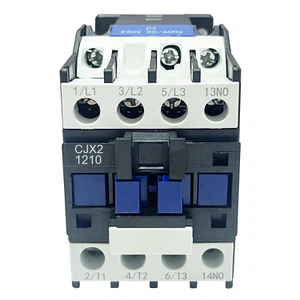
First off, let's talk about size. The Cjx2 1810 is relatively compact. It's designed to fit into tight spaces in electrical panels. This is a huge plus if you're working on a project with limited room. In contrast, some other contactors can be bulkier. For example, the Cjx2 6511 is built to handle higher currents, and because of that, it's physically larger. It has a bigger frame to accommodate the heavier-duty components needed for those high-current applications.
The smaller size of the Cjx2 1810 also makes it easier to install. You don't have to worry about finding a large, dedicated spot in your panel. It can be easily mounted alongside other components, which can save you time and hassle during the installation process.
Current Rating
One of the most important differences between contactors is their current rating. The Cjx2 1810 is rated for a specific current capacity, which is suitable for a wide range of general-purpose applications. It can handle moderate electrical loads, making it a great choice for things like small motors, lighting circuits, and other low to medium-power equipment.
On the other hand, contactors like the Cjx2 3210 and Cjx2 2510 have higher current ratings. The Cjx2 3210, for instance, can handle larger electrical loads than the Cjx2 1810. This means it's better suited for applications where you need to control more powerful motors or equipment with higher power requirements. If you're dealing with a large industrial motor, the Cjx2 3210 would be a more appropriate choice than the Cjx2 1810.
Coil Voltage
Coil voltage is another factor that sets contactors apart. The Cjx2 1810 comes with a variety of coil voltage options. This gives you flexibility when it comes to powering the contactor. You can choose a coil voltage that matches the electrical system you're working with, whether it's a low-voltage control circuit or a higher-voltage system.
Some other contactors may have more limited coil voltage options. This can be a problem if your system requires a specific coil voltage that isn't available for a particular contactor. With the Cjx2 1810, you have more choices, which makes it easier to integrate into different electrical setups.
Auxiliary Contacts
Auxiliary contacts are used to provide additional control functions in an electrical circuit. The Cjx2 1810 typically comes with a certain number and configuration of auxiliary contacts. These contacts can be used for things like signaling, interlocking, or providing feedback to other parts of the system.
The number and type of auxiliary contacts can vary between different contactors. Some contactors may have more auxiliary contacts than the Cjx2 1810, which can be useful if you need to implement more complex control strategies. However, for many basic applications, the auxiliary contacts on the Cjx2 1810 are more than sufficient.
Contact Material and Durability
The contact material used in a contactor has a big impact on its durability and performance. The Cjx2 1810 uses high-quality contact materials that are designed to withstand the wear and tear of repeated switching operations. This means it has a longer lifespan compared to some lower-quality contactors.


In addition, the design of the contacts in the Cjx2 1810 helps to reduce arcing and electrical noise. Arcing can cause damage to the contacts over time, so minimizing it is crucial for the long-term reliability of the contactor. Some other contactors may not have the same level of protection against arcing, which can lead to premature failure.
Cost
Cost is always a consideration when choosing a contactor. The Cjx2 1810 is generally more affordable compared to some of the larger, higher-rated contactors. This makes it a cost-effective solution for many applications where you don't need the high current-carrying capacity or advanced features of the more expensive models.
However, it's important to remember that you get what you pay for. While the Cjx2 1810 is a great value for money, if you have a high-power application that requires a contactor with a higher current rating and more advanced features, it may be worth investing in a more expensive model like the Cjx2 3210 or Cjx2 6511.
Application Suitability
Based on all these differences, it's clear that the Cjx2 1810 is best suited for specific types of applications. It's ideal for small to medium-sized electrical systems where space is limited and the electrical loads are relatively moderate. Examples of such applications include small workshops, commercial buildings, and residential electrical panels.
On the other hand, contactors with higher current ratings and more advanced features are better suited for industrial applications, such as large factories and manufacturing plants. These applications often require contactors that can handle high-power equipment and complex control systems.
Conclusion
So, there you have it - the main differences between the Cjx2 1810 Contactor and other contactors. Whether you're a DIY enthusiast working on a small project or an electrical professional in charge of a large industrial installation, understanding these differences can help you make the right choice for your needs.
If you're interested in purchasing the Cjx2 1810 Contactor or have any questions about its suitability for your application, feel free to reach out. I'm here to help you find the best solution for your electrical needs.
References
- General knowledge of electrical contactors from industry experience.
- Manufacturer's specifications for Cjx2 1810, Cjx2 3210, Cjx2 2510, and Cjx2 6511 contactors.
Send Inquiry