null
 
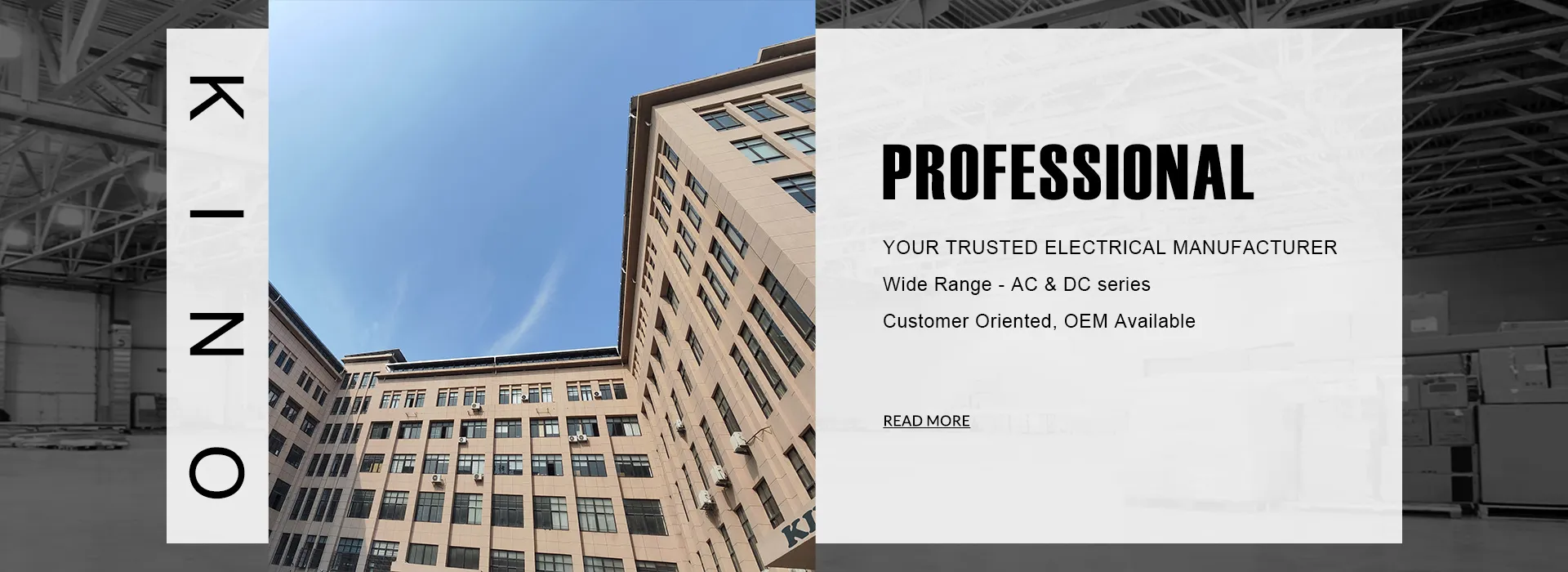
KINO ELECTRICS CO. LTD:Your Professional Distribution Box Manufacturer !
 

KINO was established in 2005 and is a professional manufacturer of low voltage electrical device. We are specialized in manufacturing the mini circuit breakers, molded case circuit breakers, ac contactors, over load relays, photovoltaic series breakers and other related electrical baskets of products. Our mission is to be a professional manufacturer for worldwide customers with high quality and best service.

Rich Products

Our company can produce mini circuit breakers, isolating switches, leakage circuit breakers, single-phase leakage circuit breakers, three-phase leakage circuit breakers, lightning arresters, molded case circuit breakers, distribution boxes, etc.

Advanced Equipment

We have 1600M² of work space and 5 production lines, as well as various assembly, calibration, packaging and other equipment.

Versatile Products

Our mini circuit breaker is an overcurrent protection device used in residential, commercial and industrial electrical systems; and the isolating switch is an important switching device in the power system. The isolating switch can be used in conjunction with other control equipment to realize the control of the power system.

Leading Service

We have many years of industry experience and a complete production management, quality supervision, sales service operation system. Whether you want to buy a mini circuit breaker or a molded case circuit breaker, just send your requirements via email and we can customize the product for you.

What is Distribution Box?


The distribution box serves as the load centre and distributor of electrical power. A distribution box ensures that electrical supply is distributed in the building, also known as a distribution board, panel board, breaker panel, or electric panel. It is the central electrical supply system of any building or property. As a component of an electrical system: it divides electrical power into subsidiary circuits and provides a protective fuse or circuit breaker for each circuit.


Types of Distribution Box


There are several types of distribution boxes designed to meet specific needs and requirements in various electrical installations. The choice of distribution boxes type depends on factors such as the application, load demand, and safety considerations. Here are some common types of distribution boxes.

Main Circuit Breaker Panel
The main and most common distribution box. Electricity travels through the wires first to a meter that records usage and then to a circuit breaker panel. The circuit breaker panel plays the role of protecting and monitoring the circuit during use. In the case of circuit overheating and short circuit faults, the components in the circuit breaker panel can detect the fault and cut off the circuit to prevent subsequent greater damage.


Main Lug Panel
The main lug panel is basically located downstream of the main circuit breaker panel and is a sub-panel used to increase the number of circuits. In the main lug panel, the upstream input wires are connected directly to the lugs. In use, it can share the load of the main circuit breaker panel to meet the increasing power demand.


Sub Panel
The relatively small size of the sub-panel allows for more detailed power distribution to specific areas or rooms. From the internal components, there is the position of the circuit breaker. In this way, specific areas or rooms can be protected during use. For places with special power requirements, in order not to affect the power consumption of other areas, it is more convenient to install and use a sub-panel.


Fuse Box
The fuse box uses disposable fuses to protect the circuit from damage caused by overloads and short circuits. Inside a fuse is a thin, fusible strip of metal called the fuse element. When the current passing through it reaches a certain value, it will heat up and melt to cut off the circuit. Fuses have a much faster reaction time than circuit breakers and are suitable for protecting sensitive electronic equipment.


Transfer Switch
The transfer switch can switch the load between the two power supplies. It is an electrical switch. When the main power supply fails or fails, the main power supply can be switched to the backup power supply through the transfer switch. On the market, there are manual transfer switches and automatic transfer switches. In comparison, the manual transfer switch is cheaper and easier to install, while the automatic transfer switch can automatically switch the power supply in time.


Features of Distribution Box

The distribution box is the equipment known as a panel board or electric panel that plays an integral role in the entire electrical system. It receives electric energy from the switchboard and distributes electricity across several circuits from the main power source and all kinds of energy-consuming devices. Here are some key features of the distribution box.

Error-Free and Time Saver Solution

In a distribution box, circuits are labeled individually which helps in recognizing circuits and makes it easy for technicians to work error free in less time taking. There is also a minimal risk in resolving problem-related circuits.

01

Adaptable Solution

Different industries have different power needs, the distribution box is an adaptable solution that can be upgraded easily as per energy requirements.

02

Extreme Safety

Comes with fuses and circuit breakers that deliver great safety for electrical circuits during operation. It provides protection during times of short circuits or overloads and prevents the risk of damage to the home, appliances, building, and electrical system as well.

03

Integrated Control

Distribution box allows to control of several circuits from one place because it works like an electrical hub that offers centralized control.

04

Highly Beneficial

For any high-rise residential buildings, big industries, and complexes where several circuits require to run an electrical system, a distribution boxes the right component to manage the complex power supply in a very simple manner.

05


Working Principle of Distribution Box

The distribution box is based on the electrical wiring requirements will switch equipment, measuring instruments, protective electrical appliances and ancillary equipment assembled in closed or semi-closed metal cabinets or screen, forming a low-voltage distribution box. The normal operation can be operated by manual or automatic switch to connect or divide the power path. Failure or abnormal operation of the use of protective electrical devices to cut off the circuit or alarm. The measuring instrument can display various parameters in operation, and also can adjust some electrical parameters to indicate or signal the deviation from normal working state.

Waterproof Distribution Box


Benefits of Distribution Box

The distribution box is one of the electrical equipment that plays an important part in the electrical system. It helps in distributing electricity across several circuits from the main power source. It comes with a fuse or circuit breaker which helps in offering protection during a short circuit. Distribution box comes in a variety of sizes according to the requirement or the number of circuits. Being an important part of an electrical system, it offers several benefits.

Din Rail Change Over Switch Slim

Easy to Troubleshoot
When the circuits are enclosed in a distribution box they are labelled individually. It helps in recognizing these circuits with ease which makes it easier for technicians or engineers to work on them. It helps in reducing the overall troubleshooting time by locating circuits without much difficulty. Due to this, there is less risk involved in resolving problems related to circuits.


Offers Centralized Control
With the help of a distribution box, it is easier to control several circuits from one place only. It is because the distribution box works like an electrical hub and helps in offering centralized control. It is easier to regulate the electrical system when all the circuits are placed in one place. It is quite beneficial for residential buildings, commercial complexes, and big industries where several circuits are used in an electrical system. With the help of the distribution box, it becomes possible to distribute and manage the power flow with ease.

Scalable Solution
The need for power supply in industries or buildings can increase at any time due to several reasons. During such times, a distribution box is of great help. To fulfil these power needs, the distribution box can be upgraded without much difficulty. Distribution boxes are responsible for managing complicated electrical systems too. To power up multiple complexes or large buildings, a distribution box is the only solution.


Provides Safety
The distribution box comes with fuses and circuit breakers that offer great safety for electrical circuits. They help in offering protection during the time of short circuits or overloads. The circuit breaker is incorporated into the distribution box so that it can trip and stop the power flow to that particular circuit. It helps in preventing damage to the electrical system, appliances, home, and buildings.

2P 5


Components of Distribution Box


The basic structure and technical aspects of electrical distribution boxes vary according to places and requirements. A typical electrical distribution box will include a bus bar, fuse links, switches, bypass equipment, and residual current detector (RSD.) and etc. These components work in tandem to facilitate the controlled and safe distribution of electrical power within a building or facility.

Main Switch
The main switch is the gateway to the entire electrical supply. Positioned at the forefront of the distribution box, it allows for the complete shutdown of electrical power. This feature is crucial during maintenance activities or in case of emergencies.


Circuit Breakers
Among the most critical components, circuit breakers act as sentinels guarding against overloads and short circuits. These automated switches trip when they detect abnormalities, preventing damage to the electrical system and connected devices.


Busbars
Busbars are conductive strips responsible for efficiently distributing electrical power to different circuits within the distribution box. They serve as the intricate network ensuring a smooth and steady flow of electricity.


Residual Current Devices (RCDs)
Safety takes center stage with Residual Current Devices (RCDs). These devices swiftly disconnect power when they detect a leakage current, a vital feature in averting electrical shocks and potential fire hazards.


MCBs and RCBOs
Miniature Circuit Breakers (MCBs) and Residual Current Breakers with Overcurrent (RCBOs) provide additional layers of protection. MCBs guard against overloads, while RCBOs offer combined protection against both overcurrent and leakage.


Neutral Busbar
The neutral busbar is a dedicated bar for connecting the neutral conductors of the various circuits. It ensures that the return current has a reliable path back to the electrical supply.


Earth (Ground) Busbar
This busbar is connected to the grounding system and provides a path for fault currents to safely dissipate into the ground. It is a crucial component for ensuring the safety of the electrical installation.


DIN Rail
The DIN rail is a standardized metal rail used for mounting and securing circuit breakers, contactors, and other modular devices within the distribution box. It provides a convenient and standardized way to install electrical components.


Enclosure
The enclosure houses all the components of the distribution box, providing protection against environmental factors and ensuring the safety of users. Enclosures are typically made of materials that meet safety standards and regulations.


Labels and Markings
Proper labeling and markings are essential for identifying each circuit within the distribution box. Clear labels help in locating specific circuits for maintenance, troubleshooting, or emergencies.


Door and Locking Mechanism
Many distribution boxes have a door that can be opened for access to the internal components. A locking mechanism ensures that only authorized personnel can access the distribution box, enhancing safety and security.


Metering Devices
In some distribution boxes, metering devices may be installed to measure and monitor electrical parameters such as voltage, current, and power consumption.


Uses of Distribution Box
 

A distribution box, also known as a distribution board, panel board, breaker panel, or electric panel, ensures that electrical power is distributed throughout the facility. It is a building’s or property’s core electrical supply system. It separates electrical power into subsidiary circuits and provides a protective fuse or circuit breaker for each circuit as part of an electrical system. Here are two common uses of distribution boxs.


Electrical Distribution
As the name suggests, the distribution box is primarily responsible for evenly distributing the electrical supply from the main supply line throughout the house. The electrical flow is divided by the distribution box upon entering the household wirings from the main supply line. It is evenly transferred to the subsidiary connections and miniature circuits across the line.


Electrical protection
The other vital purpose served by the distribution line is electrical protection to the subsidiary electrical lines and miniature circuits in the house. The distribution box is equipped with fuses and miniature circuit breakers (MCBs and MCCBs) that prevent permanent electrical damages to connected devices and wirings from risks like circuit overloads and power surges during electrical anomalies.


Factors to Consider When Choosing a Distribution Box

A distribution box, also known as a breaker panel or fuse box, is an essential component of any electrical system. It distributes electricity from the main power source to various circuits throughout the building. Choosing the right distribution box is crucial for safety and efficiency. When it comes to choosing the right distribution box for your electrical setup, there are several important factors to consider. By taking these factors into account, you can ensure that you select a distribution box that meets your specific needs and provides optimal performance.


Determine Your Electrical Load Requirements

The first step in choosing the right distribution box is to determine your electrical load requirements. This involves calculating the total power consumption of all the electrical devices and appliances that will be connected to the board. Make a list of all the circuits and their estimated power requirements to get an idea of the total load.


Consider the Number of Circuits Needed

Next, consider the number of circuits you will need in your home or business. Each circuit represents a specific area or group of electrical devices. It’s important to have enough circuits to distribute the load evenly and avoid overloading any single circuit. Take into account your current needs as well as any potential future expansions.


Evaluate the Type of distribution box

There are different types of distribution boxes available, including main switchboards, sub-distribution boxes, and final distribution boxes. Main switchboards are typically used in commercial or industrial settings, while sub-distribution boxes are used to distribute power from the main switchboard to various areas in a building. Final distribution boxes are installed at the end of each circuit. Choose the type of distribution box that best suits your specific needs.


Consider Safety Features

Safety should be a top priority when choosing a distribution box. Look for boards that have built-in safety features such as circuit breakers, residual current devices (RCDs), and surge protection. These features help protect against electrical faults, short circuits, and power surges, reducing the risk of electrical accidents and damage to your electrical devices.


Determine the Size and Capacity

Distribution boxes come in various sizes and capacities. The size refers to the physical dimensions of the board, while the capacity refers to the maximum current it can handle. Consider the available space where the board will be installed and choose a size that fits properly. The capacity should be sufficient to handle the total load requirements of your electrical system.


Consult with a Professional Electrician

Choosing the right distribution box can be a complex task, especially if you’re not familiar with electrical systems. It’s always a good idea to consult with a professional electrician who can assess your specific needs and recommend the most suitable distribution box for your home or business. They can also ensure that the installation is done correctly and in compliance with electrical safety standards.


Maintenance Tips for Distribution Box
 

Regular maintenance of the distribution box offers several benefits. It helps identify any potential issues before they escalate into major problems, ensures electrical safety, and prolongs the lifespan of the distribution box. By following a few maintenance practices, you can significantly enhance the longevity and efficiency of your distribution box.

Regular Visual Inspection
Performing regular visual inspections is the first step in distribution box maintenance. Check for any visible signs of damage, loose connections, or overheating. Look out for melted insulation, burned marks, or corrosion. If you notice any abnormalities, it’s crucial to address them promptly.


Tightening Connections
Over time, the connections within the distribution box can become loose due to vibrations or thermal expansion and contraction. Loose connections can lead to arcing, overheating, and electrical fires. Regularly tighten the terminal screws and busbar connections to ensure a secure and reliable electrical connection.


Cleaning and Dusting
Dust accumulation can hinder the proper functioning of the distribution box. Dust acts as an insulator, leading to heat buildup and reduced efficiency. Regularly clean the distribution box using a soft brush or a vacuum cleaner to remove any dust or debris. Ensure that the power supply is turned off before cleaning.


Verifying Circuit Breaker Operations
Circuit breakers are crucial components of a distribution box that protect against overcurrent and short circuits. Periodically test the circuit breakers to ensure they trip correctly and provide adequate protection. Follow the manufacturer’s guidelines for testing procedures and consult a professional if you encounter any issues.


Replacing Faulty Components
If you identify any faulty components during your maintenance inspection, it is important to replace them promptly. Faulty circuit breakers, damaged cables, or worn-out terminals can compromise the performance and safety of the distribution box. Always use genuine replacement parts and consult a qualified electrician if necessary.


Adequate Ventilation
Proper ventilation is essential to dissipate heat generated by the distribution box. Ensure that the distribution box is not obstructed by objects or covered with materials that restrict airflow. A well-ventilated distribution box operates more efficiently and reduces the risk of overheating.


Protection against Moisture
Moisture can corrode electrical connections and components, leading to poor performance and potential electrical hazards. Take measures to protect the distribution box from moisture, especially in areas prone to high humidity or water exposure. Use moisture-resistant materials, seal any gaps or openings, and consider installing a dehumidifier if necessary.


Regular Testing
Apart from visual inspections, regular testing of the distribution box is crucial to ensure its proper functioning. Test the voltage, current, and insulation resistance periodically using appropriate testing equipment. This helps identify any underlying issues and allows for timely maintenance or repairs.


Installation Precautions for Distribution Box

When it comes to installing distribution boxes, there are several important considerations to keep in mind. Proper installation is crucial for both the effectiveness and safety of the distribution box. Here are some key factors to consider.

Plastic Distribution Box
1-2
1-3
1-4

Professional Installation
It is highly recommended to consult a professional electrician for the installation of distribution boxes. Electricians have the expertise and knowledge to ensure compliance with electrical regulations and standards. They can also provide guidance on the best placement and wiring methods for the distribution box.


Proper Grounding
Ensuring proper grounding is essential for the safety of the electrical system. The distribution box should be connected to a reliable grounding system to prevent electrical shocks and potential hazards. This grounding should be done in accordance with local electrical codes and regulations.


Sufficient Ventilation
Distribution boxes generate heat during operation, so it is important to provide sufficient ventilation to prevent overheating. Make sure that the distribution box is installed in a well-ventilated area, away from any obstructions that could restrict airflow. This will help maintain optimal performance and prevent damage to the electrical components.


Clear Labeling of Circuits
Proper labeling of circuits is important for easy identification and maintenance. Each circuit should be clearly labeled to indicate its purpose and corresponding breaker or fuse. This will make it easier to troubleshoot and perform any necessary repairs or modifications in the future.


Compliance with Electrical Standards
Ensure that the distribution box meets all relevant electrical standards and regulations. This includes factors such as the type of wiring used, the capacity of the box, and the compatibility with electrical codes in your area. Choosing a distribution box from a reputable manufacturer that adheres to these standards will provide peace of mind and ensure a safe installation.


Frequently Asked Questions


Q: What criteria is used to find the dimension of a DB (distribution box)?

A: The dimension of a distribution box (DB) is determined by several criteria like equipment and component size, number of circuits, wiring, and cable management, future expansion, etc. However, it is important to understand that the specific criteria for determining the dimension of a DB may vary depending on factors such as local electrical codes, specific project requirements, and the expertise of electrical engineers or professionals involved in the design and installation process.

Q: Can distribution boxes prevent electrical fires?

A: Yes, distribution boxes can help us in many ways to prevent electrical fires. distribution boxes include circuit protection devices such as circuit breakers or fuses. These devices are designed to detect electrical faults, such as overloads or short circuits, and quickly interrupt the flow of electricity to prevent excessive current and overheating. By promptly disconnecting the faulty circuit, they help reduce the risk of electrical fires caused by overheating or electrical faults.

Q: How do I choose the right distribution box?

A: To choose the right distribution box you should determine the total electrical load that the distribution box will be serving. This will help determine the number and size of the circuit, as well as the overall capacity of the distribution box. Identify the number of circuits you need in the distribution box on the basis of present and future requirements for lighting, power outlets, appliances, and specialized equipment.

Q: Can a distribution box be customized for specific electrical requirements?

A: Yes, distribution boxes can be customized to suit specific electrical requirements. Customization allows for the integration of specific features, components, and configurations to meet the unique needs of an electrical system.

Q: Is it possible to expand or modify circuits in a distribution box?

A: Yes, distribution boxes can be customized to suit specific electrical requirements. Customization allows for the integration of specific features, components, and configurations to meet the unique needs of an electrical system.

Q: How does a distribution box work?

A: The distribution box serves as the load centre and distributor of electrical power. A distribution box ensures that electrical supply is distributed in the building, also known as a distribution box, panel board, breaker panel, or electric panel. It is the central electrical supply system of any building or property.

Q: What is inside distribution box?

A: Distribution boxes vary in shape and structure due to different usage scenarios and requirements, but the basic components include fuses, circuit breakers, SPDs, switches, bypass devices, various insulating materials, wires, bus bars, and other components

Q: How do you size a main distribution box?

A: The size of an electrical panel depends on several factors, including the number of circuits in a given space and the amperage required by those circuits. For most residential homes, a 200-amp service panel is more than adequate and most homes have electrical service panels between 100 and 200 amps.

Q: What is distribution box made of?

A: Distribution boxes are made of high-density polyethylene for years of dependable use. They are non-corrosive, strong, and lightweight for easy handling. Inlet and outlet elevations are positioned to provide equal distribution and meet most local codes.

Q: Where is the best place to put a distribution box?

A: The location needs to be easily accessible and free from any obstructions that could make installation difficult or time-consuming. In addition, the location should be close to the main electrical power source so that the box can easily be connected to it.

Q: What are the features of distribution box?

A: Distribution boxes are designed to protect electrical systems from overloading and short circuits, which can cause fires or electric shocks. By providing a centralized location for circuit breakers, RCDs, and surge protection devices, distribution boxes help improve electrical system safety.

Q: What is the difference between a fuse box and a distribution box?

A: A fuse box is a basic component that houses fuses or circuit breakers and it is designed to protect circuits from overloading/short-circuiting. A distribution box is a more sophisticated setup that includes circuit protection devices, busbars, terminals, and other components to distribute power efficiently.

Q: How long does a distribution box last?

A: Plastic and fiberglass D-boxes are expected to last for around 30 years, while concrete D-boxes can last 40 or more years. There are a few things that can shorten the life of your distribution box or require maintenance: Improper installation can result in immediate damage and issues with effluent distribution.

Q: What are the advantages of distribution box?

A: It helps in reducing the overall troubleshooting time by locating circuits without much difficulty. Due to this, there is less risk involved in resolving problems related to circuits. Offers centralized control – With the help of a distribution box, it is easier to control several circuits from one place only.

Q: What are the safety precautions for distribution box?

A: Heat dissipation is crucial for the safe operation of the electrical components within the board. Avoid covering the distribution box with any materials or obstructing the airflow around it. Proper ventilation helps prevent overheating and extends the lifespan of the electrical components.

As one of the most professional distribution box manufacturers and suppliers in China, we're featured by quality products and competitive price. Please rest assured to buy distribution box in stock here and get quotation from our factory. Also, customized service is available.

Din Rail Indicator Light 9mm, Ac Contactor, DC Miniature Circuit Breaker

Send Inquiry