null
 
KINO ELECTRICS CO. LTD:Your Professional Lightning Surge Arrester Manufacturer !
 

KINO was established in 2005 and is a professional manufacturer of low voltage electrical device. We are specialized in manufacturing the mini circuit breakers, molded case circuit breakers, ac contactors, over load relays, photovoltaic series breakers and other related electrical baskets of products. Our mission is to be a professional manufacturer for worldwide customers with high quality and best service.

Rich Products

Our company can produce mini circuit breakers, isolating switches, leakage circuit breakers, single-phase leakage circuit breakers, three-phase leakage circuit breakers, lightning arresters, molded case circuit breakers, distribution boxes, etc.

Advanced Equipment

We have 1600M² of work space and 5 production lines, as well as various assembly, calibration, packaging and other equipment.

Versatile Products

Our mini circuit breaker is an overcurrent protection device used in residential, commercial and industrial electrical systems; and the isolating switch is an important switching device in the power system. The isolating switch can be used in conjunction with other control equipment to realize the control of the power system.

Leading Service

We have many years of industry experience and a complete production management, quality supervision, sales service operation system. Whether you want to buy a mini circuit breaker or a molded case circuit breaker, just send your requirements via email and we can customize the product for you.

What is Lightning Surge Arrester?


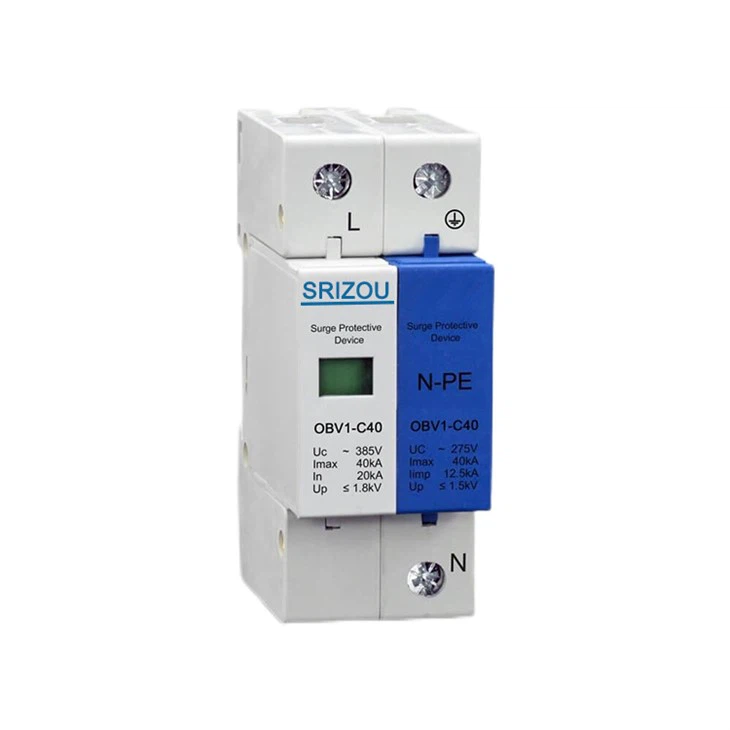
Lightning surge arresters are used to protect the electrical installation, which consists of the consumer unit, wiring and accessories, from electrical power surges known as transient overvoltages. They are also used to protect sensitive electronic equipment connected to the installation, such as computers, televisions, washing machines and safety circuits, such as fire detection systems and emergency lighting. Equipment with sensitive electronic circuitry can be vulnerable to damage by transient overvoltages.


Types of Lightning Surge Arrester


The lightning surge arrester is a component of the electrical installation protection system.This device is connected in parallel on the power supply circuit of the loads that it has to protect. It can also be used at all levels of the power supply network. This is the most commonly used and most efficient type of overvoltage protection. There are three different types of lightning surge arresters.

Type 1
This type of lightning surge arresters that can discharge partial lightning current of typically 10/350µs waveform. They are installed before the main isolation device in the load center, typically between the transformer’s secondary and the load center’s main circuit breaker. They are used in building with an installed lightning protection system and can protect against partial lightning currents resulting from direct hit lightning.


Type 2
This type of lightning surge arresters are meant for installation within the main distribution board of residential and commercial establishments. Best suited for protection against switching transients and indirect lightning, characterized by an 8/20 μs current wave. Combines Type-1 and Type-2 devices are also available in the market. Type 2 devices usually use metal oxide varistor technology.


Type 3
This type of lightning surge arresters are used to protect household appliances from the surges generated within the home. They are also known as point-of-use surge protectors. They have a very less discharge current rating – a minimum of 3kA. They are installed close to the load, say socket outlets, and act as a supplement to Type-2 lightning surge arresters.


Features of Lightning Surge Arrester


Lightning surge arresters typically have several key features designed to effectively protect electronic and electrical equipment from transient voltage spikes and surges. Some common features include:

Voltage Clamping
Lightning surge arresters are designed to clamp excessive voltage to a safe level, preventing it from reaching connected devices.


Response Time
Lightning surge arresters have a fast response time, reacting quickly to voltage surges to divert or suppress the excess energy before it can cause damage.


Energy Handling Capacity
The ability of a lightning surge arrester to handle and dissipate a specific amount of energy is a crucial feature. This is often expressed in joules and indicates how much surge energy the device can absorb.


Multiple Mode Protection
Lightning surge arresters may provide protection against different modes of surges, such as common mode (line-to-ground) and normal mode (line-to-line), ensuring comprehensive protection.


Thermal Protection
Many lightning surge arresters include thermal protection mechanisms to prevent overheating during prolonged or severe surge events.


Compatibility
Ensure the lightning surge arrester is compatible with the type of power line or data line you want to protect. Some are tailored for AC power, while others cater to specific data lines like telephone or network cables.


Working Principle of Lightning Surge Arrester

The principle of lightning surge arrester is pretty straightforward. Whenever a transient surge reaches an installed lightning surge arrester, it gets diverts the surges to the earth. This helps in limiting the amplitude of the surge and minimizing the damages caused to the electrical installations. Two modes of lightning surge arrester: Common mode and differential mode protection.

Type 2 Surge Protection Device
01.

Common Mode Protection

Protection against transient surges appearing between phase or neutral conductor and the earth (i.e.) phase-earth or neutral-earth. The common-mode overvoltages can damage the installations connected to the earth. In the event of such overvoltages, the lightning surge arrester transfers the energy directly to the earth.

02.

Differential Mode Protection

Protection against transient surges appearing between the phase and the neutral conductors. Such overvoltages are more dangerous and can damage all equipment connected to the supply. In the event of such overvoltages, the energy can be transferred to the ground or the other live conductor.

2


Benefits of Lightning Surge Arrester

Lightning surge arresters are critical components in safeguarding electrical systems and equipment from the damaging effects of voltage surges. As transient overvoltage's pose a significant threat to sensitive electronics, it is essential to understand the key benefits that lightning surge arresters provide.


Surge Suppression Capability

The primary function of a lightning surge arrester is to suppress and limit voltage surges to safe levels. Lightning surge arresters employ various technologies, such as metal oxide varistors (MOVs), gas discharge tubes, or silicon avalanche diodes, to absorb and redirect excessive energy away from connected equipment. By rapidly reacting to surge events, lightning surge arresters prevent voltage spikes from reaching sensitive electronics, thereby minimizing the risk of damage and ensuring their continued operation.


Equipment Protection

One of the significant benefits of lightning surge arresters is the protection they offer to valuable electrical equipment. These devices are particularly crucial for sensitive electronics, including computers, telecommunication systems, medical equipment, and industrial controls. By suppressing surges, lightning surge arresters shield equipment from potential malfunctions, data loss, and premature failure, thus improving the reliability and lifespan of the connected devices.


Enhanced System Reliability

Electrical systems rely on the proper functioning of interconnected components. A single surge event can disrupt the entire system, leading to downtime, repairs, and costly replacements. By mitigating the impact of surges, lightning surge arresters contribute to overall system reliability. By preventing equipment failures, lightning surge arresters minimize interruptions, improve productivity, and reduce maintenance costs, leading to increased operational efficiency.


Safety Assurance

Voltage surges not only jeopardize the integrity of electrical systems but can also pose significant safety risks. Surges can cause electrical fires, damage wiring, or create hazardous conditions for personnel. Lightning surge arresters help mitigate these risks by diverting excess energy away from the system, reducing the likelihood of equipment failures and associated safety hazards. Implementing lightning surge arresters is a proactive safety measure that protects both property and personnel.


Compliance with Standards and Codes

Lightning surge arresters play a vital role in meeting regulatory requirements and standards established by relevant authorities. Many electrical codes and industry standards mandate the use of lightning surge arresters in specific applications to ensure adequate surge protection. By incorporating lightning surge arresters into electrical systems, facility managers and building owners can demonstrate compliance and provide assurance that the necessary precautions have been taken to protect equipment and personnel.


Customizable and Scalable Solutions

Lightning surge arresters are available in a variety of configurations to suit diverse applications and installation requirements. They can be tailored to meet specific voltage ratings, surge current capacity, and response times. Additionally, lightning surge arresters are scalable, allowing for the expansion or modification of electrical systems while maintaining optimal surge protection. This flexibility ensures that lightning surge arresters can be integrated into various environments and adapted to evolving needs.


Components of Lightning Surge Arrester


Lightning surge arresters are critical components in today’s electrical systems, providing protection against transient voltage spikes and surges. Understanding the components of a lightning surge arrester is critical to selecting the right device for your specific needs. Lightning surge arresters are made up of five key components: discharge gap, gas discharge tube, suppressor diode, metal oxide varistor and choke coil, each of which plays a key role in protecting your electrical equipment.

Discharge Gap
The discharge gap is the basic component of lightning surge arrester and consists of two metal rods separated by a specific gap. One of the metal rods is connected to the power phase wire L1 or neutral wire (N) of the protected equipment, and the other metal rod is connected to the ground wire (PE). During a transient overvoltage event, the discharge gap breaks down, allowing a portion of the overvoltage charge to be directed to ground, preventing the voltage from rising on the protected equipment. Although the structure is relatively simple, its poor arc-extinguishing performance has led to improvements, such as angular gaps, that provide better arc-extinguishing capabilities.


Gas Discharge Tube
Another important component is the gas discharge tube, which consists of two cold cathode plates enclosed in a glass or ceramic tube filled with an inert gas. This component increases the probability of discharge tube triggering and plays a vital role in diverting excess voltage away from sensitive equipment. In addition, auxiliary triggering agents are often included to further optimize the efficiency of the gas discharge tube.


Suppresssion Diode
Suppression diodes are key components with clamping and voltage limiting functions. It works in the reverse breakdown zone, has low clamping voltage and fast action response, and is suitable for use as the final protection element in multi-level protection circuits. Its volt-ampere characteristic is represented by the formula I=CUα, demonstrating its nonlinear coefficients, further highlighting its effectiveness in managing voltage spikes and surges.


Metal Oxide Varistor (MOV)
It is a metal oxide semiconductor with non-linear resistance with ZnO as the main component. When the voltage applied to both ends reaches a certain value, the resistance is very sensitive to voltage. Its working principle is equivalent to the series-parallel connection of multiple semiconductor P-Ns. Varistors are characterized by good non-linear characteristics, large current capacity, low normal leakage current, and low residual voltage, the response time to instantaneous overvoltage are fast, and there is no freewheeling.


Choke Coil
The choke coil is a common mode interference suppression device with ferrite as the core. It consists of two coils of the same size and the same number of turns symmetrically wound on the same ferrite toroidal core, which forms a four-terminal device. It has to suppress the large inductance of the common-mode signal, while the small leakage inductance for the differential mode signal has almost no effect.


Applications of Lightning Surge Arrester

Lightning surge arresters are an important part of any building’s Internal Lightning Protection System (LPS). Lightning surge arresters are designed to protect sensitive electronic & electrical equipment by limiting transient overvoltage and diverting surge currents. Lightning surge arresters are the most efficient and commonly used type of overvoltage protection for an facility or load below low voltage range. Almost every household and industry’s electrical system structure must include lightning surge arresters.


Industrial

Industrial lightning surge arresters protect machines. These devices can safeguard machinery and systems in factories and other industrial settings, including safety interlock circuits, control systems, and telecommunications. Industrial lightning surge arresters are commonly mounted on a DIN rail in a panel.


Commercial

Industrial and commercial surge prevention are similar in many ways. The lightning surge arresters, however, are frequently put in building management systems for offices and commercial purposes. Systems and tools including elevators, data centers, emergency lighting, computing, and other electronics and control systems may fall under this category.


Domestic

Compared to their industrial and commercial equivalents, domestic lightning surge arresters are often better suitable for lighter-duty applications. To connect home appliances and electronic equipment, residential gadgets can be installed in consumer units, electric control panels, or surge-protected socket strips. Surge prevention for appliances can reduce safety risks from transient voltage and electrical surges.


Factors to Consider When Choosing a Lightning Surge Arrester
 

Lightning surge arresters are special and important electronic devices that are used to protect the electrical installation, which consists of the consumer unit, wiring from electrical power surges which is referred to as transient overvoltages. The selection of lightning surge arresters is a result of a combination of several factors.

01/

System Requirements
Accessing your system’s specific needs and vulnerabilities is the first step in the selection of lightning surge arresters. Analyze the type of power supply, operating voltage, and potential risks to determine the appropriate specifications that will better protect your electrical system.

02/

Installation Location
The installation location significantly impacts the selection of lightning surge arresters. For locations nearing the main circuit or power entrance, type 1 lightning surge arresters are recommended for enhanced protection. Conversely, when surge protection is provided for individual devices, it is inclined to select type 3 lightning surge arresters.

03/

Certification and Compliance
Always reach out to lightning surge arresters that are proven by international standards and certificates. This is essential to guarantee reliability, performance, and adherence to safety regulations. Compliance with recognized standards guarantees that the lightning surge arrester has undergone rigorous testing and meets quality benchmarks.

04/

Customized or Standard
To choose between a customized or standard lightning surge arrester depending on protective requirements and the level of protection needed. Customized solutions offer tailored protection based on specific needs, ensuring every aspect is coordinated for maximum effectiveness. In contrast, standard lightning surge arresters provide general protection suitable for common scenarios. By evaluating your system’s demands and risk factors, you can determine whether to select a customized or standard solution.

05/

Budget
Striking a balance between cost considerations and the need for protection is necessary when considering the selection of lightning surge arresters. Evaluating your budget constraints allows you to choose a device that offers optimal protection within financial limitations without compromising on quality or performance.

06/

Warranty
Lightning surge arrester warranty showcases the product’s durability and provides long-term reliability, indicating confidence in the device’s ability to deliver sustained protection against transient surges. By selecting lightning surge arresters with a long-term warranty, you can mitigate risks associated with equipment damage and downtime, knowing that you have reliable support in case of any issues arising during the warranty period.


Maintenance Tips for Lightning Surge Arrester

Maintaining lightning surge arresters is also essential to ensure that they are working correctly. Here are some tips on how to maintain lightning surge arresters.

01.

Regular Testing

Lightning surge arresters should be tested regularly to ensure that they are working correctly. This can be done using a surge tester or a multimeter.

02.

Replacement

Lightning surge arresters have a limited lifespan and should be replaced periodically. The manufacturer's recommendations for replacement should be followed.

03.

Visual Inspection

Lightning surge arresters should be visually inspected regularly to ensure that there are no signs of damage or wear and tear.

04.

Upgrades

As technology advances, lightning surge arresters also improve. It is recommended to upgrade lightning surge arresters periodically to ensure that they are providing the best possible protection.


Frequently Asked Questions


Q: How long do lightning surge arresters last?

A: A general rule of thumb is to replace your lightning surge arrester every 3 to 5 years, or sooner if you notice any signs of damage or malfunction. You can also check the manufacturer's warranty or rating for the lightning surge arrester, which indicates how much energy it can handle before it needs to be replaced.

Q: Where do you put a lightning surge arrester?

A: In power distributions with feed-in from below and a busbar system at the top or in the middle, the lightning surge arrester is usually installed above the circuit breaker. There is a lot of room here in the incoming panel for the lightning surge arrester and the necessary backup fuse.

Q: What is the purpose of lightning surge arrester?

A: A lightning surge arrester is a protective device for limiting transient voltages by diverting or limiting surge current and is capable of repeating these functions as specified.

Q: What is the importance of lightning surge arrester in electrical circuits?

A: It protects electrical installations against direct lightning strokes. It can discharge the back-current from lightning spreading from the earth conductor to the network conductors.

Q: Does lightning surge arrester need a fuse?

A: When the surge current passing through the lightning surge arrester exceeds its maximum capacity (Imax), the lightning surge arrester can fail due to a breakdown, resulting in a short circuit fault in the circuit. To disconnect this short circuit fault, a circuit breaker or fuse needs to be installed.

Q: Can a lightning surge arrester be connected between any two conductors?

A: Lightning surge arresters are typically connected between any two conductors of a system or service such as between the ungrounded conductor and the grounded conductor, the ungrounded conductor and the equipment grounding conductor, or the ungrounded conductor and the grounding electrode conductor.

Q: How is a lightning surge arrester wired?

A: Typically, series-connected lightning surge arrester designs are wired in series, but internal suppression components are connected in parallel to the circuit. The benefit of this configuration is that lead length is not added during installation, allowing the device to clamp impulses at tighter levels than a parallel-connect unit.

Q: What is inside a lightning surge arrester?

A: A few common surge-protective components used in manufacturing lightning surge arresters are metal oxide varistors (MOVs), avalanche breakdown diodes (ABDs), and gas discharge tubes (GDTs). MOVs are the most commonly used technology for the protection of AC power circuits.

Q: Is lightning surge arrester same as circuit breaker?

A: A lightning surge arrester is designed to protect an appliance against voltage spikes, whereas a circuit breaker will protect your home's electrical system from high currents and potential fire. A circuit breaker is usually installed in your home's main electrical panel.

Q: How do I choose lightning surge arrester voltage?

A: It should match or exceed the maximum voltage that the panel will produce. Residential systems are typically rated at 1000 V or less, but commercial or public systems may require a higher voltage rating. Hence a DC lightning surge arrester 1000V can be applied.

Q: What are the limitations of lightning surge arresters?

A: Not all lightning surge arresters can handle higher voltages. Basic ones can handle slight fluctuations. Too much exposure to high voltages may cause the lightning surge arrester to fail. Higher voltage lightning surge arresters are available but may be more expensive.

Q: How to select a lightning surge arrester?

A: The key is to look at the joule rating. This indicates the energy a lightning surge arrester can absorb. For small devices, a rating of 500 to 1,000 joules may suffice. However, for more expensive or sensitive devices like computers, home theater equipment, or gaming consoles, aim for a lightning surge arrester rated over 2,000 joules.

Q: What is the rule in installing the lightning surge arrester?

A: Connections of a lightning surge arrester to the loads should be as short as possible in order to reduce the value of the voltage protection level (installed Up) on the terminals of the protected equipment. The total length of lightning surge arrester connections to the network and the earth terminal block should not exceed 50 cm.

Q: Can lightning surge arrester work without earthing?

A: Grounding is a critical element required for proper surge protection. In regard to the question about whether lightning surge arresters work on ungrounded outlets, the answer is “no.” Lightning surge arrester typically uses components called metal oxide varistors (MOVs) to divert excess current into the ground line.

Q: What is type 1, type 2, and type 3 lightning surge arrester?

A: Type 1 & 2 lightning surge arresters are installed directly under the incoming breaker. We use Type 1 when there is a lightning bolt installed on the building roof. When there's not, we use Type 2. Type 3 is installed in parallel with the sensitive loads such as computers and printers.

As one of the most professional lightning surge arrester manufacturers and suppliers in China, we're featured by quality products and competitive price. Please rest assured to buy lightning surge arrester in stock here and get quotation from our factory. Also, customized service is available.

Elcb With Mcb, Blade Fuse Holder, Single Phase Isolator Switch

Send Inquiry