

What is the contact erosion rate of Cjx2 1810 Contactor?
Jun 09, 2025
Leave a message
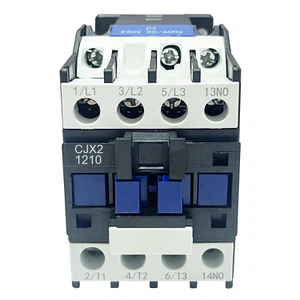
Hey there! As a supplier of the Cjx2 1810 Contactor, I often get asked about the contact erosion rate of this nifty little device. So, I thought I'd sit down and write a blog post to explain it all in a way that's easy to understand.


First off, let's talk about what contact erosion is. In simple terms, contact erosion is the wear and tear that occurs on the contacts of a contactor over time. Every time the contactor opens and closes, there's a bit of arcing. This arcing is like a tiny electrical explosion, and it can cause the metal on the contacts to melt and vaporize. Over thousands or even millions of operations, this can lead to a loss of material on the contacts, which is what we call erosion.
Now, the contact erosion rate of the Cjx2 1810 Contactor isn't a one - size - fits - all number. It depends on a bunch of factors. One of the biggest factors is the electrical load. If you're using the contactor to switch a high - current load, there'll be more arcing, and the erosion rate will be higher. For example, if you're using it to control a large motor that draws a lot of current, the contacts are going to take a beating compared to if you're using it for a small, low - power device.
The frequency of operation also plays a huge role. If the contactor is opening and closing frequently, say, in a process where it needs to switch on and off every few seconds, the erosion rate will be much faster than if it only operates once in a while.
Another factor is the type of circuit. AC (alternating current) and DC (direct current) circuits can have different effects on contact erosion. In AC circuits, the current reverses direction periodically, which can sometimes help to reduce the arcing. In DC circuits, the current flows in one direction, and the arcing can be more persistent, leading to potentially higher erosion rates.
The Cjx2 1810 Contactor is designed to handle a certain range of loads and operating conditions. It's built with high - quality materials to minimize contact erosion as much as possible. The contacts are made of a special alloy that can withstand the heat and stress of arcing better than some other materials.
Manufacturers usually provide some general guidelines about the expected contact erosion rate based on standard operating conditions. But in real - world applications, it can vary quite a bit. That's why it's important to monitor the condition of the contacts regularly, especially in high - stress applications. You can look for signs of pitting or uneven wear on the contacts. If you notice significant erosion, it might be time to replace the contacts or the entire contactor.
If you're in the market for a contactor, you might also be interested in other models in the Cjx2 series. For example, the Cjx2 8011 is a great option if you need to handle larger loads. It has a higher current - carrying capacity and is suitable for more heavy - duty applications. The Cjx2 4011 is also a popular choice, offering a good balance between load capacity and cost. And the Cjx2 2510 is a bit smaller but still very reliable for medium - sized loads.
As a supplier, I can offer you the best prices and high - quality Cjx2 1810 Contactors. Whether you're an electrician working on a small project or a large industrial company, we've got you covered. If you have any questions about the contact erosion rate or any other technical aspects of the Cjx2 1810 Contactor, or if you're interested in placing an order, don't hesitate to reach out. We're here to help you find the right solution for your electrical needs.
When it comes to getting the most out of your contactor, proper installation and maintenance are key. Make sure to follow the manufacturer's instructions when installing the contactor. This includes things like proper wiring, mounting, and ensuring that the environment is suitable. A dirty or dusty environment can also affect the performance of the contactor and increase the erosion rate.
Regular maintenance can also extend the life of the contacts. This can involve cleaning the contacts periodically to remove any debris or oxidation. You can use a special contact cleaner that's designed for this purpose. Just be careful not to damage the contacts while cleaning.
In conclusion, the contact erosion rate of the Cjx2 1810 Contactor is influenced by many factors, including electrical load, frequency of operation, and the type of circuit. But with proper installation, maintenance, and by choosing the right model for your application, you can minimize the erosion and get a long - lasting, reliable performance from your contactor.
If you're interested in purchasing the Cjx2 1810 Contactor or any other products in the Cjx2 series, feel free to get in touch. We're always ready to discuss your requirements and offer you the best solutions.
References
- Electrical Contact Handbook by R. Holm
- Handbook of Electrical Contacts by M. J. Pecht
Send Inquiry