

Can a Change Over Switch be used in a DC circuit?
Jul 18, 2025
Leave a message
Hey there! As a supplier of change over switches, I often get asked if these switches can be used in a DC circuit. Well, let's dive right into it and find out.
First off, what exactly is a change over switch? It's a nifty little device that allows you to switch between two different power sources. You can connect it to two input terminals and one output terminal, and with a simple flick, you can direct power from one source to the other. It's super handy in many applications, like backup power systems where you might want to switch from the main power grid to a generator when there's a power outage.
Now, onto the big question: Can it be used in a DC circuit? The short answer is yes, but there are some important things to consider.
DC circuits operate on direct current, which means the flow of electric charge is in one direction. Unlike AC (alternating current) circuits, where the current periodically reverses direction, DC circuits have a constant flow. This difference has implications for how change over switches work in DC circuits.
One of the key considerations is the voltage and current ratings of the switch. DC circuits can have a wide range of voltages, from a few volts in small electronic devices to hundreds or even thousands of volts in industrial applications. You need to make sure that the change over switch you choose can handle the specific voltage and current levels of your DC circuit. If the switch isn't rated for the voltage or current, it could overheat, fail, or even pose a safety hazard.
Another factor is the arc suppression. When you switch a circuit, an arc can form between the contacts of the switch. In AC circuits, the current naturally goes through zero twice per cycle, which helps the arc to extinguish. But in DC circuits, there's no such natural zero - crossing, so the arc can be more persistent and difficult to extinguish. That's why many change over switches designed for DC circuits have special arc - suppression features, like arc chutes or magnetic blow - out coils, to help break the arc quickly and safely.
Let's talk about some of the applications where change over switches are used in DC circuits. In solar power systems, for example, you might use a change over switch to switch between the solar panels and a battery bank. During the day, when the solar panels are generating power, you can connect the load to the panels. At night or when the panels aren't producing enough power, you can switch to the battery bank.
In automotive applications, change over switches can be used to switch between different battery sources. For instance, in a vehicle with a dual - battery system, you can use a switch to choose which battery to use for starting the engine or powering the accessories.
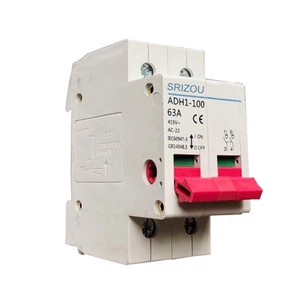
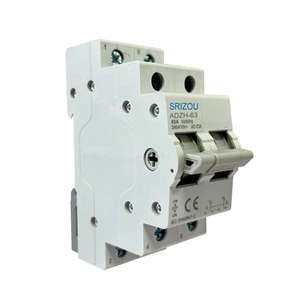
Now, as a supplier, I offer a variety of change over switches that are suitable for DC circuits. We have the Din Rail Change Over Switch Large, which is great for high - current and high - voltage DC applications. It's a robust switch that can handle the demands of industrial and commercial DC circuits.
If you're looking for something more compact, we also have the Din Rail Change Over Switch Slim. This switch is perfect for applications where space is limited, like in small electronic enclosures or control panels.
When choosing a change over switch for your DC circuit, here are some steps to follow. First, determine the voltage and current requirements of your circuit. You can do this by looking at the specifications of the devices that will be connected to the circuit. Next, consider the arc - suppression requirements. If your circuit has high - current or high - inductance loads, you'll need a switch with good arc - suppression capabilities.
Also, think about the physical size and mounting requirements. If you're installing the switch in a tight space, you'll want a compact switch. And make sure it can be easily mounted in your control panel or enclosure.
It's also a good idea to look at the durability and reliability of the switch. You want a switch that will last for a long time and operate smoothly. Check the number of switching cycles the switch is rated for, as well as the environmental conditions it can withstand, like temperature, humidity, and vibration.
In conclusion, change over switches can definitely be used in DC circuits, but you need to choose the right one for your specific application. Whether you're working on a small DIY project or a large industrial installation, I've got the right change over switch for you.


If you're interested in purchasing a change over switch for your DC circuit, I'd love to have a chat with you. We can discuss your requirements in detail and find the perfect switch for your needs. Don't hesitate to reach out and start the procurement process. I'm here to help you make the right choice and ensure that your DC circuit operates safely and efficiently.
References
- Electrical Engineering Handbook, various editions
- Manufacturer's specifications for change over switches
Send Inquiry